The Gutenberg Parenthesis
The Age of Print and Its Lessons for the Age of the Internet
Summary
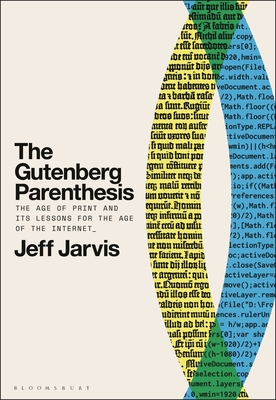
The book builds on Lars Ole Sauerberg’s idea of the “Gutenberg parenthesis”: the age of print as a ~500-year exception—a blip between a pre-print, more oral and conversational world and the post-print one we’re entering. It traces how technology has changed the way we persist and share knowledge, and what we stand to lose and gain as the parenthesis closes.
Stages the book explores:
- Pre-writing: knowledge was transferred vocally.
- Pre-printing press: writing was an exclusive skill; institutions like the church could gatekeep what was shared.
- Print: the press brought fears of “loss of truth”; print also created “mass” (mass media, mass market, mass culture, mass politics) and tied knowledge to completeness, permanence, and authority. Gatekeeping under print did real work: recommending quality, certifying fact, supporting creativity, and making narrative the central cultural form.
- Digital / internet: the irony that books are now treated as “sources of truth” while the internet is the new “pool of unverified” information. We’re facing a “crisis of cognition”: a shift from linear narrative and fixed texts to something more chaotic and collaborative.
- AI: as a final (new) addition, the book explores how the same thing is happening again with the rise of Gen AI and information being generated by LLMs; the human content on the internet is now becoming “threatened” by the new chaotic slop (the AI content).
Jarvis isn’t catastrophist. He argues we can benefit from embracing new, more conversational forms and that the task is to replace the functions print culture served—quality, certification, support for creativity—rather than to mourn the medium. The book does a strong job of showing how these dynamics recur across media shifts and who controls the medium.