On the Shoulders of Giants
The Great Works of Physics and Astronomy
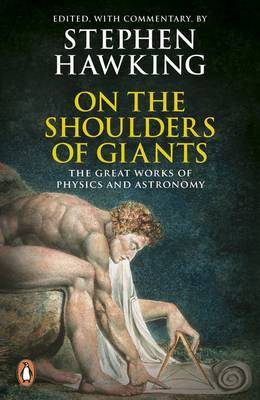
TL;DR
A classic, and a must read if you’re into science (especially physics) at all. This book heavily inspired my conference talk about the history of the web, and more generally how I zoom out and look at the bigger picture of things these days.
How did we get to where things are today? And who were some of the biggest influences that got us there?
Not only does this create an appropriate amount of appreciation for those that paved the path, but in my experience it also forces you to ask the right questions about how and why things evolved the way they did.
Summary
The scientists the book explores as the “giants” modern science is built on top of:
- Nicolaus Copernicus: Copernicus proposed the heliocentric model, shifting Earth from the center of the universe and reframing humanity’s place in the cosmos. His work sparked the scientific revolution by challenging centuries of accepted doctrine.
- Galileo Galilei: his telescopic observations provided evidence for heliocentrism and refined the scientific method through experimentation. His conflict with authority highlighted the tension between observation and tradition.
- Johannes Kepler: laws of planetary motion replaced circular orbits with ellipses and introduced precise mathematical descriptions of the heavens. His work turned astronomy into a predictive science.
- Sir Isaac Newton: he unified celestial and terrestrial physics with the laws of motion and universal gravitation. This synthesis became the foundation of classical mechanics for centuries.
- Albert Einstein: Einstein’s theories of relativity redefined space, time, and gravity, explaining phenomena Newtonian physics couldn’t. His ideas underpin modern cosmology and much of contemporary physics.